For our last class blog, I have decided choose a topic that not only interests me, but is also part of my roots: music of the Philippines. I am part Filipino, and although I wasn't born there, I would want to visit it someday. Although the Philippines may not be considered the most advanced or richest country, there is still a lot to learn and see from it. The culture there as a whole I have always heard is very welcoming. Everybody treats each other like family. If you don't have a place to stay, chances are, someone will let you crash at their place for the night. But what's more than that is their rich history, more specifically, the conjoining of various different cultures into one.
The Philippines was originally a very indigenous land with various tribes and traditions roaming the land. It wasn't until the Spanish inquisition in the late 1500s that cemented the area as more of a country. During the Spanish inquisition, the guitar was notably introduced to the native people and it remains a prominent instrument in modern Filipino folk music. Later on during World War II, the Philippines were invaded again, this time by Japan. The Japanese took resources and attempted to expand their military before they surrendered and the Philippines regained control at the end of the war. America also colonized the Philippines for some time and brought changes to their educational system and infrastructural advancements. And of course, there was the widespread introduction of English to the country. There were a few more regions that had a lot of influence to the Philippines as well, but these are arguably the most important.
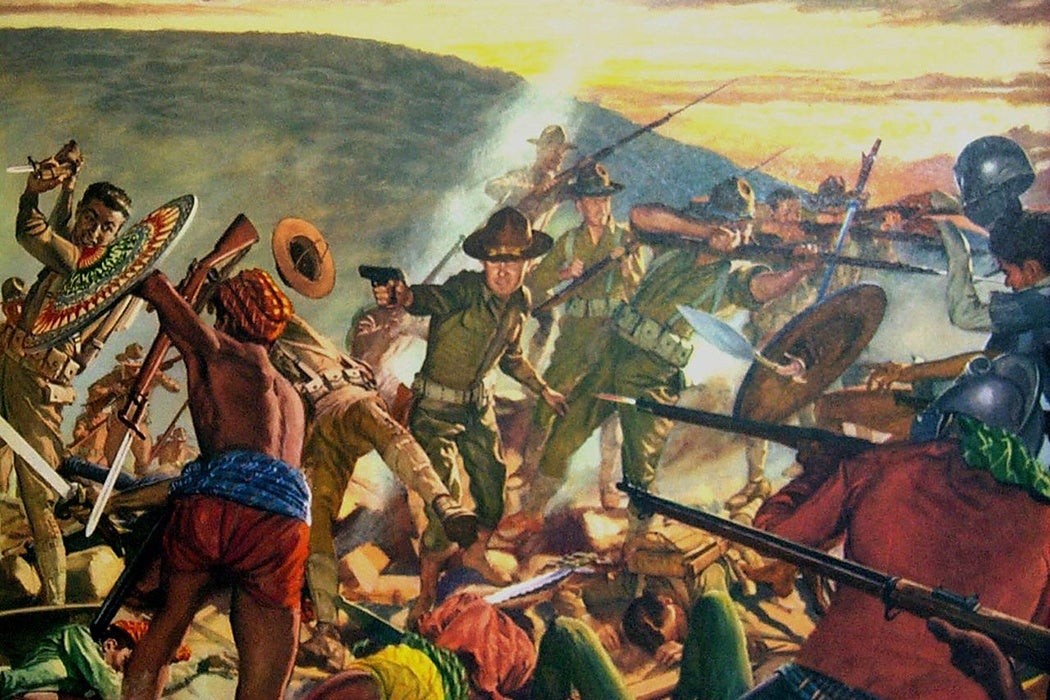
This painting is cool
Coming back to music, you can probably already see how culturally-intertwined music from the Philippines is. There are many different types of music in the Philippines, so I'll talk about some of the most popular ones and some of my favorites as well.
First, lets look at traditional tribal music. The T'boli tribe is one of the earliest tribes from the "Philippines" (before it was the Philippines). They are an Austronesian group known for their intricate clothing, jewelry, and craftsmanship. Moreover, they have created some of their very own instruments and music.
Here you can see T'boli people playing a unique guitar and drum instrument.
It's cool to see such historical music kept alive to this day by the means of tradition through the tribe's presence.
One of the more syncretic styles of music in the Philippines is that of Spanish/Filipino music. The video below shows a small ensemble playing chordophones like the Spanish guitar and mandolin. There is also a pretty talented percussionist playing the cajon, the box drum he's sitting on. He then plays a really cool part on the tambourine. You also can't see it that well, but the guy on the far right is playing the upright bass. These are all common instruments from Spain that have most likely been introduced during the Spanish invasion and have been kept alive in folk music that is very present in the Philippines.
One type of music that surprised me in being relatively common in the Philippines is classical string and orchestral music. There are many classical players, from small ensembles, to huge orchestras, like pictured below:
The Manila Symphonic Orchestra, one of Asia's oldest string orchestras
Classical music in the Philippines sees its roots from the Spanish, who brought a lot of string instruments to the Philippines, but also European countries, and America, too. Orchestral music always seems to find a way into all cultures. I like to see how each culture bends such music to their own taste to create something new. This wondrous piece I found by the Manila Symphonic Orchestra demonstrates their ability to create majestic sounds while incorporating different instruments and cultural styles into their music. I unfortunately don't speak Tagalog, the native language, so I don't understand it. But it seems to be a tribute to a famous composer, Ryan Cayabyab.
Last on the list, a very good syncretic folk/pop band called Ben&Ben. Paolo and Miguel Benjamin are brothers and perform various types of music along with seven others. They originated from Manila and perform various types of contemporary Filipino music. They sing a lot of songs in Tagalog, but also some in English in order to reach a broader audience. It's a true combination of American pop music and more traditional folk Filipino music. I like to hear their electric guitar riffs, because they use unique scales native to their culture. All their songs feature traditional American pop instruments like guitars, pianos, and drum sets. There's also a lot of strings in them, too. It's a blend of all different cultures.
"Sunrise" shows their upbeat style and vast orchestration with each record. This one features primarily-English lyrics, but also includes the word "maliwanag" which means bright and sunny in Tagalog.
I think it's a great thing to trace your roots and indulge in the music of one's own culture because it lets you learn about yourself and the world around you more. I honestly learned a lot more than I expected by listening to all this different music. I think music of the Philippines encapsulates what Music of Diverse cultures is all about because it shows how when different cultures come together, a mix of many different styles can occur to create a vast array of different styles and genres.
Bibliography
“Filipino Music History.” Filipino Music History,Music History of Philippines,History of Philippian Music, themusichistory.com/filipino-music-history.html. Accessed 2 Dec. 2023.
“Music.” Philippine History, 18 June 2011, kasaysayanngpilipinas.wordpress.com/music/.
Team, Chords for a Cause. “The History of Music in Filipino Culture - Chords for a Cause %using the Endless Possibilities of Music to Improve Lives through Volunteering, Fundrasing and Researc%.” Chords For A Cause, 2 June 2022, chordsforacause.org/the-history-of-music-in-filipino-culture/.