For our last class blog, I have decided choose a topic that not only interests me, but is also part of my roots: music of the Philippines. I am part Filipino, and although I wasn't born there, I would want to visit it someday. Although the Philippines may not be considered the most advanced or richest country, there is still a lot to learn and see from it. The culture there as a whole I have always heard is very welcoming. Everybody treats each other like family. If you don't have a place to stay, chances are, someone will let you crash at their place for the night. But what's more than that is their rich history, more specifically, the conjoining of various different cultures into one.
The Philippines was originally a very indigenous land with various tribes and traditions roaming the land. It wasn't until the Spanish inquisition in the late 1500s that cemented the area as more of a country. During the Spanish inquisition, the guitar was notably introduced to the native people and it remains a prominent instrument in modern Filipino folk music. Later on during World War II, the Philippines were invaded again, this time by Japan. The Japanese took resources and attempted to expand their military before they surrendered and the Philippines regained control at the end of the war. America also colonized the Philippines for some time and brought changes to their educational system and infrastructural advancements. And of course, there was the widespread introduction of English to the country. There were a few more regions that had a lot of influence to the Philippines as well, but these are arguably the most important.
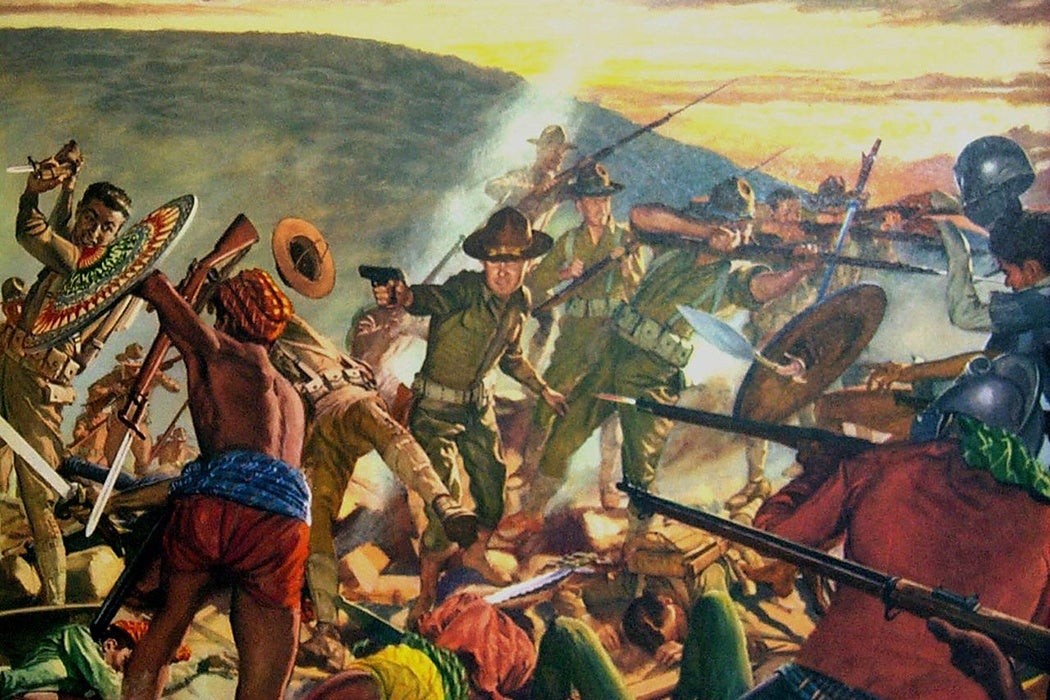
This painting is cool
Coming back to music, you can probably already see how culturally-intertwined music from the Philippines is. There are many different types of music in the Philippines, so I'll talk about some of the most popular ones and some of my favorites as well.
First, lets look at traditional tribal music. The T'boli tribe is one of the earliest tribes from the "Philippines" (before it was the Philippines). They are an Austronesian group known for their intricate clothing, jewelry, and craftsmanship. Moreover, they have created some of their very own instruments and music.
Here you can see T'boli people playing a unique guitar and drum instrument.
It's cool to see such historical music kept alive to this day by the means of tradition through the tribe's presence.
One of the more syncretic styles of music in the Philippines is that of Spanish/Filipino music. The video below shows a small ensemble playing chordophones like the Spanish guitar and mandolin. There is also a pretty talented percussionist playing the cajon, the box drum he's sitting on. He then plays a really cool part on the tambourine. You also can't see it that well, but the guy on the far right is playing the upright bass. These are all common instruments from Spain that have most likely been introduced during the Spanish invasion and have been kept alive in folk music that is very present in the Philippines.
One type of music that surprised me in being relatively common in the Philippines is classical string and orchestral music. There are many classical players, from small ensembles, to huge orchestras, like pictured below:
The Manila Symphonic Orchestra, one of Asia's oldest string orchestras
Classical music in the Philippines sees its roots from the Spanish, who brought a lot of string instruments to the Philippines, but also European countries, and America, too. Orchestral music always seems to find a way into all cultures. I like to see how each culture bends such music to their own taste to create something new. This wondrous piece I found by the Manila Symphonic Orchestra demonstrates their ability to create majestic sounds while incorporating different instruments and cultural styles into their music. I unfortunately don't speak Tagalog, the native language, so I don't understand it. But it seems to be a tribute to a famous composer, Ryan Cayabyab.
Last on the list, a very good syncretic folk/pop band called Ben&Ben. Paolo and Miguel Benjamin are brothers and perform various types of music along with seven others. They originated from Manila and perform various types of contemporary Filipino music. They sing a lot of songs in Tagalog, but also some in English in order to reach a broader audience. It's a true combination of American pop music and more traditional folk Filipino music. I like to hear their electric guitar riffs, because they use unique scales native to their culture. All their songs feature traditional American pop instruments like guitars, pianos, and drum sets. There's also a lot of strings in them, too. It's a blend of all different cultures.
"Sunrise" shows their upbeat style and vast orchestration with each record. This one features primarily-English lyrics, but also includes the word "maliwanag" which means bright and sunny in Tagalog.
I think it's a great thing to trace your roots and indulge in the music of one's own culture because it lets you learn about yourself and the world around you more. I honestly learned a lot more than I expected by listening to all this different music. I think music of the Philippines encapsulates what Music of Diverse cultures is all about because it shows how when different cultures come together, a mix of many different styles can occur to create a vast array of different styles and genres.
Bibliography
“Filipino Music History.” Filipino Music History,Music History of Philippines,History of Philippian Music, themusichistory.com/filipino-music-history.html. Accessed 2 Dec. 2023.
“Music.” Philippine History, 18 June 2011, kasaysayanngpilipinas.wordpress.com/music/.
Team, Chords for a Cause. “The History of Music in Filipino Culture - Chords for a Cause %using the Endless Possibilities of Music to Improve Lives through Volunteering, Fundrasing and Researc%.” Chords For A Cause, 2 June 2022, chordsforacause.org/the-history-of-music-in-filipino-culture/.
Welcome back to this special blog. For this interview, I have decided to interview my grandma as I think she has an interesting history with music and likes a lot of bands that I do. My family grew up in Binghamton, New York which is a small town in the upstate region. She has a lot of cool experiences from childhood that will be shared in this blog.
Me: What is your earliest music memory?
Grandma: The earliest significant music memory I have is watching the Beatles on TV in the 1960s. Everyone was going crazy about them, especially the girls. They would cheer them on like crazy almost to the point of the band being inaudible.
Me: Tell me more about the Beatles.
Grandma: The Beatles music was revolutionary. We used to know the lyrics to all their songs. They played so many songs and we just memorized them. That era had a lot of good music, that's why I listen to it all the time here.
Me: Who was your favorite Beatle?
Grandma: Paul McCartney was my favorite, but Ringo Starr and I share the same birthday (July 7), although he is a little older than me.
America has a vast and interesting history when it comes to music. One feature common among many of its native genres is that they were born from lower class, poor, and sometimes delinquent populations that were very present in earlier years. One such musical genre that came out of these times is rock, more specifically folk rock. This genre speaks to me because I like folk and rock, but I also like it when two parties come together to make something new, i.e. folk-rock. To me, it's the perfect mix between intricate lyrics and the wonderful imperfections of drive and distortion. It's everything that I find interesting about music.
To understand the sub genre of folk rock, one must first understand folk and rock. Folk most commonly refers to acoustic music with well-crafted lyrics. They're songs perfect for singing around a campfire, but also arguably one of the most artistic styles of music. Musically, it incorporates complex melodies, whether in guitar/piano parts or vocals. The songs tend to speak about common emotions, everyday life, and politics where words may fail. Rock music, on the other hand, usually incorporates heavier musical textures and themes in lyrics not too far from what you'd find in a generic pop song. On the surface, it seems much more underwhelming than folk music, but in reality it can convey heavier emotions more efficiently through the means of catchy riffs and easier-to-sing-along-to words which make it easier for other people to sing (or play) along to.
Below is an example of a classic folk song, with just an acoustic guitar and voice, singing about how the Earth is everybody's land.
Folk rock is often attributed to artists like Bob Dylan and Pete Seeger who, in the 1960s, grew very popular for founding a syncretic mix of both acoustic and electric instruments with hippie-esque lyrics straight from the heart. Artists like Dylan were heavily inspired by early blues/rock artists like Chuck Berry who was known for his legendary electric guitar solos. This is what influenced them to add a touch of the grungier tone associated with folk rock today.
Here, we can see Bob Dylan performing one of his classics, "Like A Rolling Stone":
You can see how classic folk cliches are present within the song like the term, "rolling stone," arguably made famous by Muddy Waters (who also inspired the Rolling Stones' name). But Bob Dylan is playing an electric guitar while also playing with the Paul Butterfield Blues Band. It's no wonder Bob Dylan was a master at the craft as he was surrounded by all different types of musicians who inspired him to make unique music.
Another key aspect of folk rock is its voice of political advocacy. Here we can see more of the folk side of the genre in that folk music tends to delve into deeper topics through the means of emotional words and call-to-action phrases. Mid-1900s America was filled with politics like the Vietnam War and monumental Civil Rights movements. The duo Simon and Garfunkel were very political, which we know. Their song, "Sound of Silence" was actually written about the Vietnam War.
This is my favorite version of the song which so happens to be a prime example of folk rock. The song itself was made in a way to protest the war. It's about people being ignorant to the war and politics of the time, which created a sense of silence in the country which apparently got on these guys' nerves, so they decided to sing about it like a bunch of hippies. It seemed to work as the song is very popular to this day.
Now that we've seen how folk rock came to life, we can't help but discuss one of the biggest folk rock bands of all time. While I think it's hard to classify any band at all under one genre, I can say for sure the Beatles definitely show symptoms of folk rock.
"
"Nowhere Man" speaks of a oblivious man living a directionless life. The song ironically fits in with Simon and Garfunkel's "Sound of Silence" in a way because it talks of someone who doesn't care about the world around them, but also saying how that can be all of us sometimes. It's a classic folk music topic. And of course rock comes in to play with a steady drum beat and electric guitar rhythms. "Here Comes the Sun" and Lennon's "Imagine" are other great examples of this style of music.
Something significant about the Beatles is that they expounded upon the genre with advancements like multitracking and stereo recording with the help of their all-star producer and honorary fifth Beatle, George Martin. Martin helped write additional instrument parts from strings to horns. This in turn lead to extra sub genres like chamber folk (folk music with small string ensembles).
George Martin conducting a string ensemble for a recording
It's cool to see how such a common genre today has such vast history and syncretism that gets overlooked a lot. But understanding the origin helps to understand how the music works. I love folk rock because it doesn't get too boring like how listening to a strict folk music playlist does after 4 or 5 songs and keeps audiences hooked with cool electric guitar features and deep lyrics.
Bibliography:
“Folk Rock Music Guide: What Does Folk Rock Sound like? - 2023.” MasterClass, www.masterclass.com/articles/folk-rock-music-guide. Accessed 29 Oct. 2023.
Joanne. “The Birth of Legends: How The Beatles Changed Music History.” Studio72, 21 Apr. 2022, www.studio72.sg/blog/the-birth-of-legends-how-the-beatles-changed-music-history/#:~:text=The%20Beatles%20pioneered%20the%20use,innovation%20in%20the%20music%20industry.
“The Sixties . Timeline . Text Version.” PBS, Public Broadcasting Service, www.pbs.org/opb/thesixties/timeline/timeline_text.html. Accessed 29 Oct. 2023.
Music and its history has a lot to say about culture, but also gender as well. There have been many noticeable stereotypes with music and gender like how flutes tend to be a feminine instrument whereas a drum set tends to be associated with men. But gender stereotypes have always been pushed, especially now where women are playing instruments and music that the world never would have thought of back in the day. One of my favorite rock bands that you may or may not have heard of, The Smashing Pumpkins, is currently made up of members Billy Corgan (lead singer/guitarist), James Iha (guitarist), Jimmy Chamberlin (drummer), and Jedf Schroeder (keys). But up until 1999, their mainstay bass player was a female, D'arcy Wretzky. Here is a video where you can see her and the guys performing one of their biggest hits, Bullet with Butterfly Wings:
D'arcy broke a big stereotype that hard rock was mainly a man's sport, and even played an instrument which not many women are known for playing, even today - the electric bass. Luckily, she among other females encouraged other girls to ensue what they wanted despite what others may associate it with.
Furthermore, guys have also been breaking stereotypes as well. This dude named Donovan was on America's Got Talent a few years ago and sang some crazy high notes that are normally harder for normal guys like me to sing. Obviously he had a lot of practice in order to be a professional soprano opera singer. Even though he didn't win the season, he is undeniably very talented.
Lastly, I want to point out a part of the world where females are very present in music: Iceland. Icelandic songs are very intriguing in their complex vocal melodies and instrumentation. Björk is one of the most famous and recognizable faces from the area. She wrote a song called Jóga in her third album and this live performance of that song is crazy to watch:
While she's most often labeled a pop singer, I think the term "art pop" fits her more because to me she always tends to portray music in a more artistic way, whether it be the vast instrumentation and writing or the performance of her songs live. It's all very well made.
Lastly, another Icelandic band, Of Monsters and Men, had their huge hit a while ago with "Little Talks." One of their lead singers is named Nanna and she's also a really good singer. I just love the way her voice sounds especially when she and the other lead singer, Ragnar sing together.
I'd definitely recommend listening to some of their more recent songs and albums as well as they contain more amazing tunes. Nanna also has a solo project under her own name with awesome harmonies and sounds similar to Björk.
Music has always been a great way to add to events, ceremonies, and other rituals. Where words cannot speak, music often finds way to enhance the mood of an event, whether it be joyous or gloomy. My favorite time of year, minus all the sickness, is Christmas. One of the greatest remnants of the good days of childhood lies in Christmas music. Every time I hear that glockenspiel start playing before Mariah Carey sings her only good song, I am immediately transported back into an inner dream of my old living room with the happy little ghost of myself who doesn't talk to me much nowadays. Besides a sob story, I would like to get to the heart of the issue and address what makes Christmas music so nostalgic for most of us. Similar to how someone might hear a sitar and associate it with Indian music, we might associate jingle bells to Christmas time.
In this song by indie pop band, The Go! Team, you can hear the very Jingle bell I just talked about all throughout the song. To me, this is a giveaway indication to it being a song about Christmas (and New Year). The lyrics affirm my very intelligent theory. My point is it's interesting how certain instruments can be tied to one specific type of music, or in this case, ritual. Christmas would not be the same without jingle bells.
If you think about it, it's not far from obvious as to why jingle bells are a staple of Christmas music. When you think about jingle bells, chances are you think of the ancient prophecy of Santa Claus gliding through the night sky, delivering presents to good little boys and girls around the world. But he would not be able to navigate as easily if it weren't for his reindeer and their jingle bells. Then Jingle Bell Rock hit the radios in 1957, and engraved the sound of jingle bells into our innocent minds. And now, it's pretty rare to find jingle bells in genres outside of Christmas music.
Apart from Christmas music and jingle bells, there are other darker rituals you will find music a part of. If you are an avid music enthusiast, you may know some hidden lore such as the 27 club (I won't explain that now, but you can look it up if you have a few hours on your hands). Some believe in music as being a ritual for more secret things. I came across a theory a while ago and would just like to clarify that I am no crazy conspiracist that lives in his mothers basement posting silly little speculations on Facebook. However, this one kind of goes hard. Basically, if you ever heard of Prince, you may know he's a pretty good musician. One of his songs is called "I Would Die 4 U" and it's crazy.
But the song is not as crazy as the person who first came up with a theory that I Would Die 4 U was a prophecy. They took the title literally and said that it was no coincidence that the number 4 and letter U were used. It seems like a clever little trick to make the title more unique, but someone went deeper. See, if you look at when Prince died, you will find it was on the 21st of April. April is the fourth month of the year. U is the 21st letter of the alphabet. Well would you look at that... I Would Die 4 U aka I Would Die 4/21? I don't think it's super serious, but I thought it was pretty crazy how the numbers match up. Now I hope that I don't end up dying anytime soon for some "mysterious" reason.
Again, some people take theories like this to the max and speculate that all popular music is tied back to the illuminati and we're all being brainwashed with backwards messages and propagandist lyrics. But even in a more shallow sense, some people think all music is a ritual just because you are "conjuring" your emotions in a different way and expressing ideas through the means of sound. So then is all music ritualistic? What do you think?
What's up. I am Augustine and I like music because why not. I was born at a young age, and ever since, I have been into music. I enjoy music that is detailed, complex, and most importantly, artistic. That's what I believe music is fundamentally. I am originally from Binghamton, New York, a small town in the upstate known as the "Carousel Capital" of the country. I hate carousel music. At the less younger age of 13, I started taking piano lessons before moving to South Carolina. In a time of desolation, I picked up a cheap toy acoustic guitar that lay in my house and began learning every part of all my favorite songs. I don't think I would have been a musician in any other universe, but now I'm going to college for it and am obligated to label myself with such a goofy title. Like previously mentioned, I am into complicated music as I feel it's very fulfilling. My favorite genres include indie, rock, indie rock, shoegaze, math rock, indie, folk, indie folk, and indie, and other stuff like that. Ten years from now I'll probably be very broke and out there in terms of mentality, but that's just part of being someone who is fascinated with music enough to make a career out of it.
Here is some cool music that I like that you should listen to...
This first one is my go-to right now. Indie folk/rock group Bright Eyes recently released a bunch of EPs of alternate "companion" versions of their most well-known songs featuring folk female duo First Aid Kit. The song includes a lot of chordophones like guitars and mandolins and has really cool drums. The lyrics sound like it's a song about uncertainty and death but the fun music makes you forget about that nonsense. What I like most about this band is that the lead singer's vocals kind of suck, but they're supposed to so you have to pretend that you like it until you gaslight yourself into actually liking it. Then you can brag about it and act like you're more intricate than all your friends. But his voice layered with First Aid Kit's voices bring a lot of energy to an otherwise basic folk song and make you want to dance to it or something.
Next up is Sufjan Stevens. You may have actually heard of him from TikTok but I've been listening to him before he was famous, I promise. This song is important to me because it's kind of like the music that I like to write. In this specific piece, you will find a lot of complex layering of sounds and melodies and countermelodies and cool stuff like that. It's also kind of funny how at one point it sounds like a very calming choir piece before going full rock with heavy electric guitars and drums. Towards the end, we are introduced to the coda which mixes all of the previous sections of the song into one in a satisfying way.
Last and least is Katy Perry's "Firework." I think it sounds pretty good until she starts singing. The lyrics sound silly and some of the metaphors like plastic bags in the wind don't stick very well. It also encapsulates my beef with pop songs very well i.e. the same 4 chords literally throughout the whole song and overproduced sounds and synths that make a track sound lifelessly robotic to me. I guess there are some people out there who like it and all I can say is sorry.